One obligation. A solution for every network.
Every network is different. The obligation is the same. Our solution family covers broadband, VoIP, IPES, LTE, satellite, wireless and circuit-switched networks, each one engineered to the appropriate lawfully authorized electronic surveillance (LAES) standards — in accordance with the ATIS standards in the United States and the ETSI standards abroad.
Every discipline, one Trusted Third Party.
Lawful intercept is one of the practices this Trusted Third Party operates. This page covers the intercept practice in depth — the records desk and the international practice each have their own.
Lawful Intercept
Court-ordered intercepts operated end to end — engineered to the safe-harbor standards, delivered to the agency, logged and kept. Covered in depth on this page.
Subpoena Compliance
Subpoenas, court orders, preservation and emergency requests — validated, produced to the limits of the process, and recorded for audit.
DMCA Records Production
Copyright takedown notices validated and subscribers notified, with a documented repeat-infringer policy — and identity never released to the claimant.
International Operations
Lawful intercept, records production and data retention for providers operating abroad, in nearly thirty countries.
One obligation, six very different networks.
A court order does not care how your network is built. The interface that answers it does. Each is engineered to the safe-harbor standard that actually applies to it.
Broadband
Packet-data access engineered to the applicable industry standard, delivering call-identifying information and content to the requesting agency in the form its systems expect.
VoIP
Session border controllers, soft switches, SIP proxies and media relays, in active or passive deployment depending on how your voice platform is actually built.
IPES
If your network carries an IP-enabled service with a lawful-intercept obligation, we have a solution for it. Tell us the network and we will tell you what applies. Contact sales.
Wireless & LTE
Mobile networks and the resellers riding on them, including MVNOs, where the obligation attaches to the service you sell rather than the spectrum you own.
Satellite
Satellite links carry the same statutory obligation as terrestrial ones, with delivery engineered around the topology rather than fighting it.
Circuit-Switched
Legacy time-division multiplexing in a class-5 switching environment, where call content is often handled on a path separate from call data.
Mixed Estates
Most providers run more than one of the above, usually inherited through acquisition. One relationship covers the whole estate instead of one per technology.
From order received to evidence delivered.
The same four things happen whatever the network underneath looks like. They are the part providers most often discover they cannot do with an order already in hand.
Define
The target and the delivery destination are provisioned from what the order authorizes, and only from what it authorizes.
Collect
Call-identifying information and, where the order permits it, call content, taken from the network without disturbing service.
Convert
Translated into the standard format the requesting agency's collection systems can actually ingest.
Deliver
Handed to the agency over a secure path, with the whole exchange monitored and recorded for the record.
The first court order is the wrong place to find a gap.
A capability that exists on a specification and a capability that has been provisioned under a live order are not the same thing. The distance between them tends to get discovered under time pressure, by the provider, with an agency waiting.
Standing the interface up, exercising it against the collection systems agencies actually deploy, and documenting the result is the entire point of doing it early.
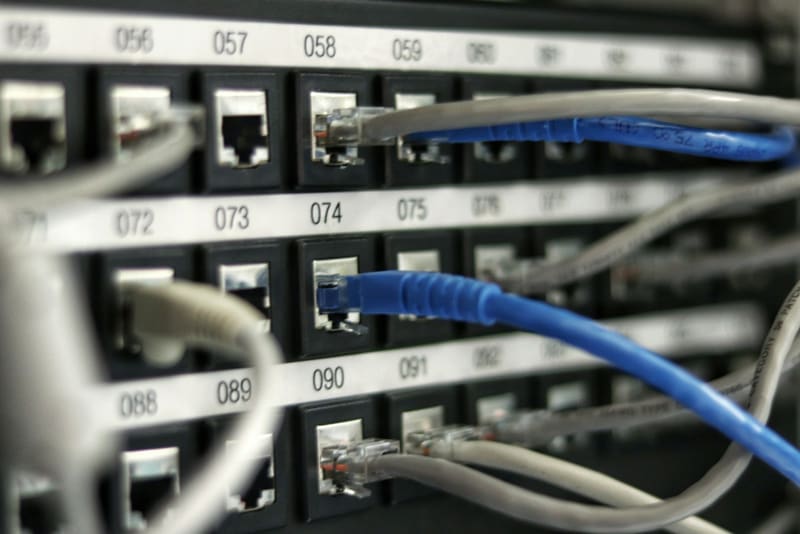
"Compliant from a law enforcement agency's perspective" gets tested here.
Our validation process runs the same collection system software used by many federal, state and local agencies, used by thousands of law-enforcement and intelligence users worldwide. Test traffic is transmitted exactly as it would to a law enforcement agency's monitoring center, and every call event is decoded, sequenced and checked.
The work is documented like the evidence it protects: a combined Test Plan/Test Case document maps every requirement in the functional specification to a specific test. You get a documented report of the results.
One obligation, several ways to meet it.
Three disciplines, and more than one name for each. Whichever term you came looking for, these are the pages behind it.
Safe Harbor Intercept
Lawful intercept operated end to end — target and destination defined from the order, call data and content collected, converted and delivered to the agency.
Hosted CALEA Compliance
The same obligation delivered as a hosted service, with no mediation device to buy and nothing to operate on site.
Compliance Analysis
Independent validation that your intercept capability actually delivers what an agency's systems can read — every requirement mapped to a test case.
VoIP Lawful Intercept
Interconnected VoIP has been covered since 2005. Session border controllers, soft switches, SIP proxies and media relays, active or passive.
Wireless & MVNO Compliance
Tier-2 and tier-3 operators and MVNOs carry the same duty as national networks. The obligation follows the service you sell, not the spectrum you own.
Records Production
Subpoenas, court orders, preservation and emergency requests — validated, produced to the limits of the process, and recorded for audit.
Subpoena Processing
The operational half of records production: intake, validation, production and the audited record the whole exchange runs on.
DMCA Records Production
Copyright takedown notices validated and subscribers notified, with a documented repeat-infringer policy — and identity never released to the claimant.
International Operations
Lawful intercept, records production and data retention for providers operating abroad, in nearly thirty countries.
CALEA compliance, answered.
What is CALEA, and does it apply to my network?
The Communications Assistance for Law Enforcement Act (47 U.S.C. § 1001 and following) requires telecommunications carriers to have the capability to isolate and deliver a named subscriber's communications and call-identifying information to a law-enforcement agency when a court order or other lawful authorization requires it. It applies to facilities-based broadband and interconnected VoIP providers as well as traditional carriers, and to the resellers riding on them, including MVNOs. If you sell communications service, assume it applies and confirm the exception rather than the rule.
What is a CALEA "safe harbor"?
Section 107 of CALEA provides that a carrier meeting the publicly available technical requirements or standards adopted by an industry association or standard-setting organization "shall be found to be in compliance" with the assistance-capability requirements. Engineering the intercept interface to the applicable industry standard for your network type is what puts a provider in that safe harbor — which is why every Subsentio solution is built to the standard that applies, not to a generic one.
What is a Trusted Third Party?
A company a carrier authorizes to operate its lawful-intercept obligation on its behalf: receiving and validating orders, provisioning the intercept, mediating and delivering to the agency, and keeping the record. CALEA anticipates the arrangement. Subsentio is the largest CALEA Trusted Third Party in the United States.
Do I have to buy and operate equipment to be compliant?
Not necessarily. The obligation is the capability, not the ownership of a device. Subsentio offers the intercept function as a hosted service with no mediation device to buy and nothing to operate on site, as well as solutions engineered around equipment a network already has. The free network analysis is how we work out which fits.
What does compliance analysis actually test?
Whether your intercept capability delivers what a law-enforcement agency's collection systems can actually read. Test traffic is transmitted exactly as it would be to an agency monitoring center, every call event is decoded, sequenced and checked, and every requirement in the functional specification is mapped to a test case and a result. The point is to find a gap before a live order does.
How long does it take to become compliant?
It depends on the network — how many technologies are in the estate, whether the equipment already supports intercept features, and whether the interface is hosted or on site. The free technical analysis produces a specific recommendation and timeline for your network; we do not quote a generic one.
Talk to the experts.
We'll conduct a free technical analysis of your network and recommend the least-cost and minimally invasive path to compliance.